Showing posts with label Cordless saw. Show all posts

Thursday, March 14, 2013

How to Create Additional Shelf for Garage Melamine Cabinet

Radial Saw
By Gary Boutin

Supplies and Tools:
Cordless saw 18-volt
Cordless screwdriver with Phillip bit
Metal shelf clips
Pan head screws  
Scrap melamine shelf  
Tack hammer

Mr. Jelack needed another shelf in his garage cabinets. He lives in Fontana, California a well developed area.

This post shows the eleven steps to creating an extra melamine shelf.

Step 1: Fig.1 shows the cabinet that needs a new shelf.
Fig.1 Shelf
Step 2: Fig.2 shows the scrap melamine shelf being cut with a cordless saw.
Fig.2 Scrap
Step 3: Fig.3 shows the new shelf being fitted into the garage cabinet.
Fig.3 Being fitted
Step 4: Fig.4 shows the clips that will be used to hold the new shelf into the cabinet.
Fig.4 Clip
Step 5: Fig.5 shows the tack hammer used to drive the metal clips into the cabinet.
Fig.5 Hammer
Step 6: Fig.6 shows the package of pan head screws used to hold down the shelf. Each bracket clip has a hole which a pan head screw is applied to secure the shelf to the cabinet.
Fig.6 Pan 
head screws
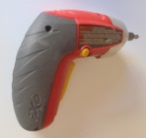
Step 7: Below left fig.7 shows the mini screwdriver with enough power to screw underneath the shelf. A Phillips bit is ready to be used for the pan head screws.
Fig.7 Screwdriver
Step 8: In fig.8 a Phillips bit is ready to be used.
Fig.8 Phillip tip
Step 9: Fig.9 shows the pan head screw at the bottom of the shelf.
Fig.9 Bottom 
of shelf
Step 10: Fig.10 shows that the screw have been secured and is safe in the cabinet.
Fig.10 Drilled
Step 11: Fig.11 shows that the rear part of the shelf is now secured. Now the shelf is ready for use, Mr. Jelack can load new items inside his cabinet.


Update: DIY Advisor has New blogs check them today:

  • Cookie Alert: European Union laws requires that you know that this blog uses cookies. If you are concerned about this please click here to see how Google uses this information.

Note: The DIY Advisor assumes no liability for omissions, errors or the outcome of any jobs. The reader must always exercise reasonable caution, follow current codes and regulations that may apply, and is urged to consult with a licensed contractor if in doubt about any steps on these posts. All names were changed to protect client's privacy. DIY Advisor. Reproduction of site content including photos without permission prohibited. All rights reserved. © Copyright 2011-

Sunday, January 22, 2012

Bathroom Limestone - Part 1 of 3 - Vinyl Floor Removed and Sub Floor Replaced


All supplies

By Gary Boutin 

Supplies and Tools:
Acrylic caulking latex 
Caulk gun
Circular saw
Cordless drill 12 and 18-volt
3 3/8-inch cordless circular saw
Deck screws
Douglas fir stud 2x4x8 
Fiberglass R30
Mechanics gloves
Oriented strand boards (OSB) 19/32-inch
Phillips screwdriver 
Reciprocating blades 
Vacuum 

This job is located in the City of Pomona, a multi-story condominium in a beautiful rural setting with mature oak trees and a well established community.

The post shows the thirteen steps to the removal and replacement of a hallway bathroom floor. 

Step 1: Fig.1 shows the project was started by the homeowner who removed the vanity, the plumbing except the stop valves, ABS drain line, and the floor around the toilet.
Fig.1 Only sink lines are left
Step 2: Fig.2 and fig.3 shows the old linoleum floor. The reason the floor has been removed is that the old floor had holes in it and was leaking water into the garage.
Fig.2 Linoleum
Fig.3 Floor holes


Step 3: Fig.4 shows that the entire linoleum floor needed removal including around the toilet.
Fig.4 Vinyl cover removed
Step 4: Fig.5 shows Carl cutting the old damaged flooring using a 3-3/8-inch cordless circular saw. 
Fig.5 Cut plywood out
Step 5: Fig.6 shows that we completed removal of the floor, and now we installed Douglas Fir 2x4 wood edges to hang the new floor on. The old floor stopped at the wall, but had no wood edges.
Fig.6 Additional bracing
Step 6: Fig.7 shows the circular saw used to cut the floor edges to be fitted on the floor.  
Fig.7 Floor removed
Step 7: Fig.8 shows the removed wet fiberglass and vacuumed the area of dirt, dust and wood chips.
Fig.8 Clean up the mess

Step 8: Fig.9 shows that we replaced the damaged fiberglass. 
Fig.9 Replace the 
wet fiberglass
Step 9: Fig.10 shows the bathroom fiberglass was replaced in the floor area.
Fig.10 Installing 
new fiberglass
Step 10: Fig.10 shows Carl starting to measure the area for a new side support.
Fig.10 Measuring the floor
Step 11: Fig.11 shows the cutting of the OSB particle board.
Fig.11 OSB board trimmed
Step 12: Fig.12 shows that the floor with the new sub-floor installed. Carl is using a cordless drill to screw in deck screws that will never rust.


Fig.15 Screwing the floor
Step 13: Fig.16 shows Carl has caulked the floor edges with silicone. The first part of this job is now completed.
Fig.16 Caulking to 
the floor gaps
Bathroom Limestone Tiling:

DIY Advisor Blogs:
  • Handyman Blog: DIY Advisor
  • Food Blog: From Gary Boutin
  • Artwork Blog: Light in Dark Artwork
  • Class-A Tests: DIY Class-A Drivers License Tests
    • Cookie Alert: European Union laws requires that you know that this blog uses cookies. If you are concerned about this please click here to see how Google uses this information.

    Note: The DIY Advisor assumes no liability for omissions, errors or the outcome of any jobs. The reader must always exercise reasonable caution, follow current codes and regulations that may apply, and is urged to consult with a licensed contractor if in doubt about any steps on these posts. All names were changed to protect client's privacy. DIY Advisor. Reproduction of site content including photos without permission prohibited. All rights reserved. © Copyright 2011-